
Measuring respiration rate
Updated onJune 25, 2026
Respiration rate describes how often you inhale and exhale in a minute. It is also a primary vital sign along with heart rate, blood pressure, and body temperature. Resting respiration rates are typically between 12-20 times per minute during rest and can be around 40-50 times per minute during intense physical activity. This increase in respiration rate reflects the increased oxygen demand for producing aerobic energy.
How respiration rate is measured
Aidlab uses a transthoracic impedance measurement method to determine the respiratory rate. During respiration, the electrical properties of the chest tissues change, so by measuring the changes in thoracic impedance, the respiratory rhythm can be determined.
Respiratory rate during sleep
The clearest trends often appear at night. During the day, breathing changes with walking, training, talking, and stress, so individual values can be harder to interpret. During sleep, conditions are more stable, so night-time respiratory rate is usually more comparable from day to day.
If your night-time value suddenly rises, it may reflect increased body load, weaker recovery, illness, alcohol, or a harder training session. Look at the trend across several nights rather than a single reading.
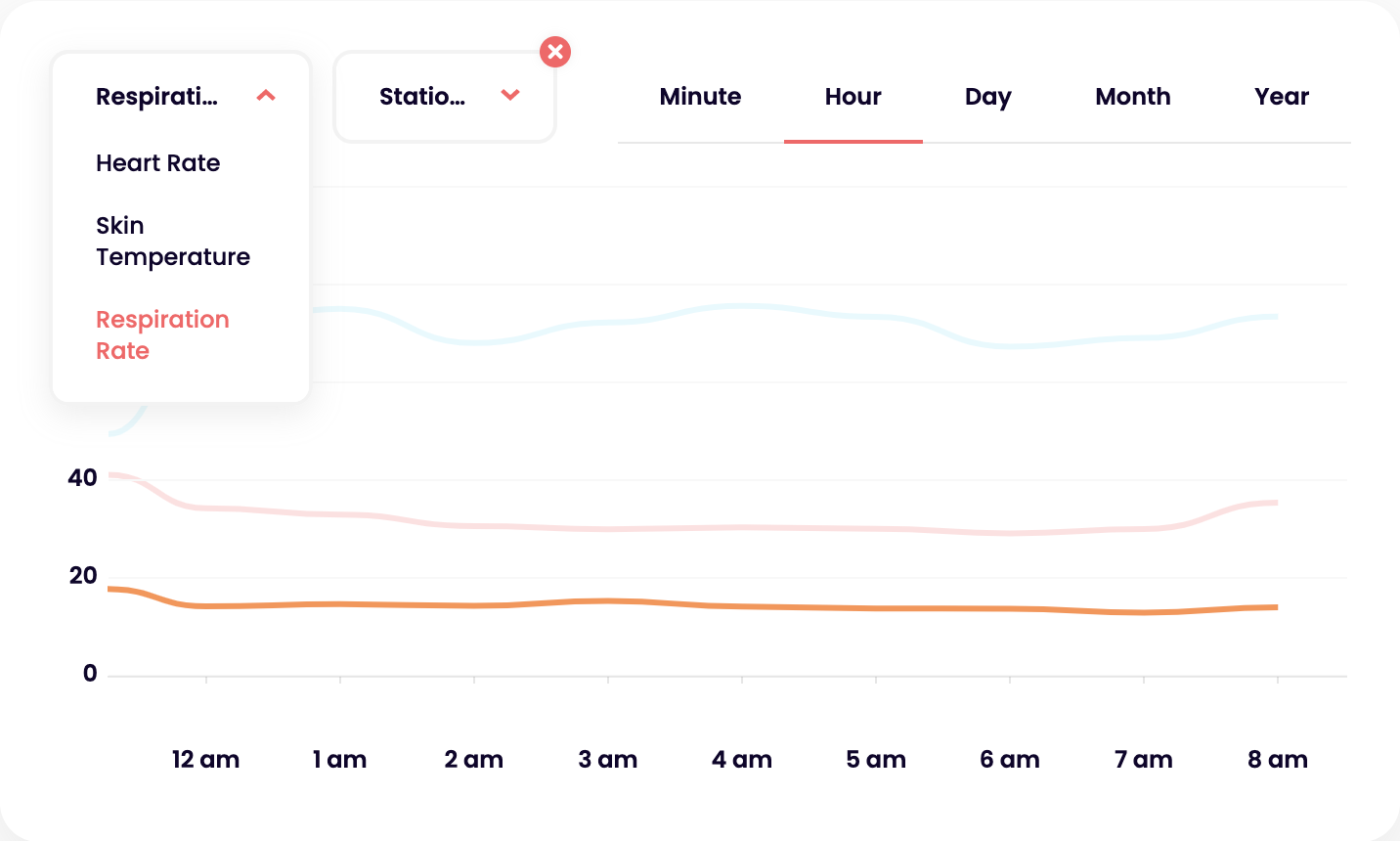
View historical respiratory rate
- Log in to your Aidlab Cloud.
- Select Respiration Rate from the dropdown menu.
Related
Important
Aidlab does not diagnose diseases or sleep disorders, including sleep apnea. If you experience shortness of breath, chest pain, or other concerning symptoms, consult a healthcare professional.